
The people here take pride in hosting guests and consider it an honor. This is an account of the journey through the enchanting valley of Ghizer
The summer season does not arrive here because this beautiful valley is situated 9,855 feet above sea level. It’s as if summer simply bypasses this place. While every region of the homeland is beautiful, this one is truly unique.

From the azure waters of the seaside to the snow-capped mountains of Gilgit and Chitral, every view invites you to gaze in awe. However, the northern areas of Pakistan, due to their unparalleled beauty, are a major attraction for tourists from around the world. For years, it has been our routine to enjoy the serene atmosphere of these regions every summer, and so far, 42 such trips have become a part of our past.
The people here are peaceful, hospitable, and courteous. Countless small and large valleys are spread across this region, each offering its own unique charm and identity. Some valleys are situated at higher altitudes, while others are lower. As a result, in some areas, apples are more abundant, while in others, grapes and apricots flourish. In some places, heavy snowfall occurs in winter, while in others, it is lighter.
Among these valleys is the mention of Phander Valley, where the ever-changing beauty of the Phander Lake invites you to enjoy the view. Phander Valley is a part of the Gupis tehsil in the Ghizer district of Gilgit. To reach Phander Valley, you must first travel to the city of Gilgit.

From Rawalpindi, traveling through Abbottabad and Hazara, you will journey along the Silk Road, where the mighty Shyad River (Indus River) flows alongside, flanked by some of the tallest mountains in the world. Passing through Basham, Kohistan Waso, and Chilas, you will eventually reach Gilgit, the largest city in the northern areas. Before you arrive in Gilgit, you’ll encounter a remarkable spot where some of the highest mountain ranges in the world converge. Here, the great mountain ranges of the Hindu Kush, Karakoram, and Himalayas meet, standing side by side.
Surrounded by the towering peaks of the Karakoram range, Gilgit city enjoys a moderate climate, quite different from the heat of the plains. When we reached Gilgit, grapes, apples, and pomegranates were being sold at very affordable prices in the markets, which were bustling with activity. Gilgit is a beautiful city, with the Gilgit River flowing alongside it. Over time, the population has also expanded on the other side of the river. Now, the river flows almost through the middle of the city, with both old wooden swinging bridges and modern bridges connecting the two banks.
To reach Phander Valley, various modes of transportation are available from Gilgit. Taxis are available at any time and can take you to your destination in a short time. Vans also travel to almost all the valleys. We boarded a van to Phander, and it set off. The route from Gilgit to Phander takes you through the beautiful valleys of Punyal and Gupis in Ghizer. The details of these beautiful valleys will be saved for later. In Gupis, drivers usually stop the vehicle for a while.

After having lunch at a hotel in Gupis and enjoying some tea, we set off for the picturesque Phander Valley. The journey from Gilgit to Phander takes about six hours by van, although having your own vehicle would obviously shorten the journey. Phander is located on the Chitral Road, a road that passes through the famous Shandur Top and leads into the Chitral Valley.
Shandur Top, situated at an altitude of 12,500 feet, is a beautiful pass with a large open space. On one side, glaciers stretch across the landscape, and on the other side, a small, stunning lake shimmers with its blue waters. This is also home to the world’s highest polo ground, where the Shandur Festival is held every summer. Teams from all over the country, especially from Gilgit and Chitral, compete here. The border between Gilgit and Chitral lies at the Shandur Top.
When we arrived in Phander, it was the month of September, meaning that winter had already begun. The wheat harvest had been completed, and threshers were busy separating wheat from the chaff. From a distance, the wheat fields appeared as gray strips. Occasionally, small groups of people could be seen in the lush fields, digging up potatoes. In some areas, corn was also growing, signaling the approach of autumn.
The central area of Phander spans about 5 to 6 kilometers. My local friends were waiting for me in the valley. Throughout the journey, every 15-20 minutes, I would receive calls asking, “Where is the van now?” The P.T.D.C. hotel is located on a hill, very close to Phander Lake, and it marks the beginning of the central Phander area. At various points along the way, people would stop the van near their homes and get off.

At one stop, two boys approached the driver and asked in the local language if there were any guests from Punjab. Before the driver could respond, I quickly answered, “Yes, I am.” Upon hearing this, the boys’ faces lit up with joy. They said, “We’ve checked many vans waiting for you.”
They greeted me warmly and joyfully. Their house was nearby, and their parents were waiting for me. My room was beautifully decorated; every pillow, bed sheet, and curtain was hand-embroidered. After performing the evening prayers, the temperature began to drop. The door was first closed, and then I was given a blanket. While the days were pleasant, the nights became quite cold. My hosts also provided a new quilt, anticipating the chill. Around 1 AM, I woke up shivering from the cold, and that quilt came in handy.
The people here are very friendly and hospitable. Not only in Phander, but the people of Gilgit, Baltistan, Chitral, and other mountainous areas are generally warm-hearted and welcoming. Visitors to these valleys are often addressed as “guests.” The next day, after breakfast, my host told me that some of their cousins and other relatives were coming to visit. They had their young children with them, who greeted me with great affection and joy. Everyone invited me to their homes and insisted that I must come.
Most of these visitors were either active military personnel or retired soldiers. The majority of Phander’s population works in the military. I estimate that around 80% of the people in Phander have a military career. Due to the cold weather, the summer season is short, with only one crop being harvested. Spring begins to arrive in early May, and by the end of September, the harvest is completed. Snow begins to accumulate on the mountain peaks, and the cold sets in, spreading its grip over the entire valley.
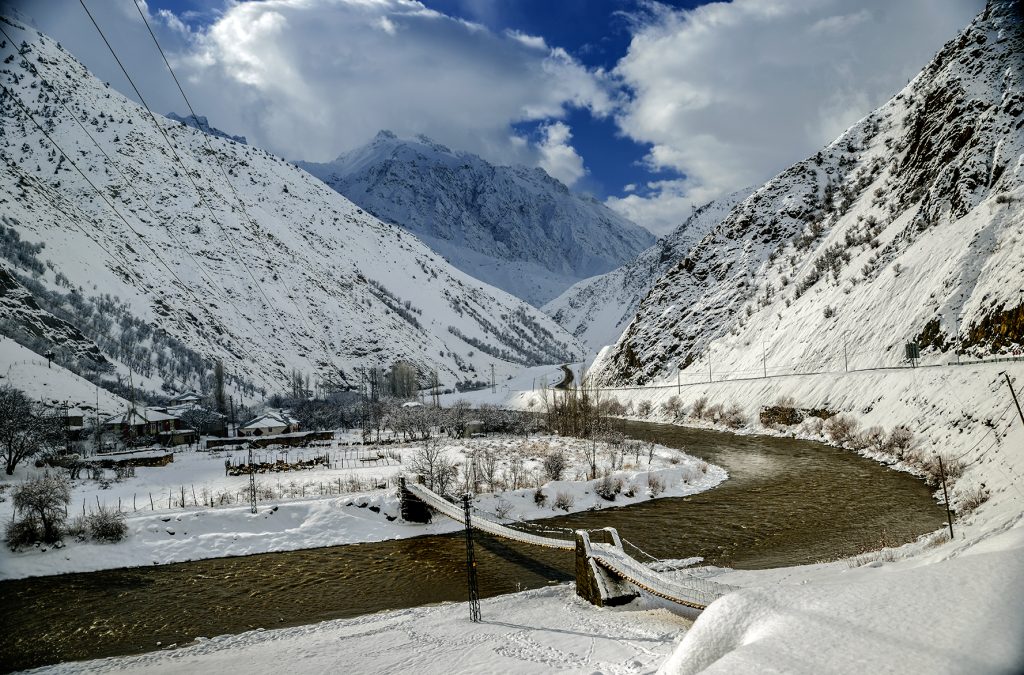
In these circumstances, finding employment becomes quite difficult. People prefer to join the military, as they are brave, loyal to the country, and love their nation. If the head of the household is present, he will usually be retired from the military, and his two or three sons will also be in the army. Alternatively, one member of the family may stay back to manage farming and livestock, while the rest of the brothers serve in the military. These courageous and valiant people are willing to sacrifice their lives for the sake of the homeland.
Phander is also the land of martyrs. In every village, along the road, you will find the graves of martyrs with the Pakistani flag fluttering above them. Beautiful graves are built for the martyrs, and the national flag is raised on tall bamboo poles beside them. Stopping by the graves, I offered a prayer for them. May Allah elevate the status of these martyrs who sacrificed their lives for the nation and attained the rank of martyrdom. Most of them were between the ages of 20 and 25, martyred on the front lines during the Kargil conflict.
The people’s way of life and social structure are very strong. Generally, the entire family lives together, sharing meals. Sometimes, a single household may include 25 to 30 people: brothers, their children, and parents. They live together with much love and respect for each other, always following the elders’ commands. If the family is large and the house feels small, the brothers collectively build a separate home for the eldest brother and happily give him his own space.
Even after living separately, they maintain the same warmth and love for their siblings as before. When the time comes, the brothers jointly build a house for the next brother, and this tradition continues. One day, I decided to roam around the village by myself and noticed that most of the houses did not have outer walls. I was surprised and learned that outer walls were not necessary here because everyone living around is either a relative or a familiar face. No outsider stays in the area. The people have been living in these regions for centuries, passing down from one generation to the next. They deeply respect one another. There is no theft, no quarrels, and the atmosphere is peaceful and harmonious. So, what need is there for external walls?

I was wandering around the village alone, and whenever I met anyone, I would be the first to greet them. It wasn’t just a simple “hello”—often, people would invite me to come to their homes for a while, offering me tea. These people didn’t just say it as a formality; in some places, they insisted so strongly that I had to sit and have tea before I could leave. Even the schoolchildren, both boys and girls, greeted me as they passed by.
There was a street running right alongside the river, and on the other side, the houses were located. There were no external walls, and as I walked, I suddenly found myself in the yard of a house, as the street ahead ended there. The head of the household, along with his children, was sitting outside, chatting while sitting on a carpet. I hesitated, wondering what the family would think. In a moment of panic, I turned back, but then I heard a voice calling out, “Sir, why are you leaving?”
I explained that I hadn’t realized the street ended in their yard. He laughed and said, “What’s the matter? You are our guest. This home is also yours.” He insisted, and with great hospitality, he made me sit on the carpet with his family, offering me tea and many other things. He even accompanied me for a long distance to see me off. The head of this household was also a soldier, who had come home on a month’s leave. We still keep in touch through phone calls.
The people here are very eager to educate themselves. Military personnel, having seen large cities and even having served in UN peacekeeping missions abroad, are well aware of the importance of education. There are both government and private schools in various places, and a large number of children eagerly pursue their studies. Girls also attend school with great enthusiasm and continue their education in colleges.
Polo is very popular in Gilgit-Baltistan and Chitral. Every valley has a polo ground where local teams regularly play. They then participate in the bigger polo tournaments in Shandur or Gilgit city. There are also polo grounds in central Phander, where people enjoy the game and encourage their players.
In mountainous areas, rivers and streams rush rapidly, foaming with speed, but in Phander Valley, the river flows in a calm and serene manner. Surrounded by towering mountains, the river moves at a slow pace with great dignity. This peaceful flow of the river is only observed in the 5-6 kilometers of Phander Valley. The land here has a gentle slope, which allows the water to flow slowly and calmly.
There are no visible stones along the riverbanks or in the river itself. The banks are made of sandy land, where homes have been built, and there is no danger of erosion or flooding. If the water level rises during the rainy season, it may reach the edges of the riverbank, but the water does not have the force to erode the land. In certain areas of the river, there are small islands, naturally covered with greenery and trees, which look very beautiful. The river also contains trout fish, which live in the icy waters, and people eagerly fish for them.
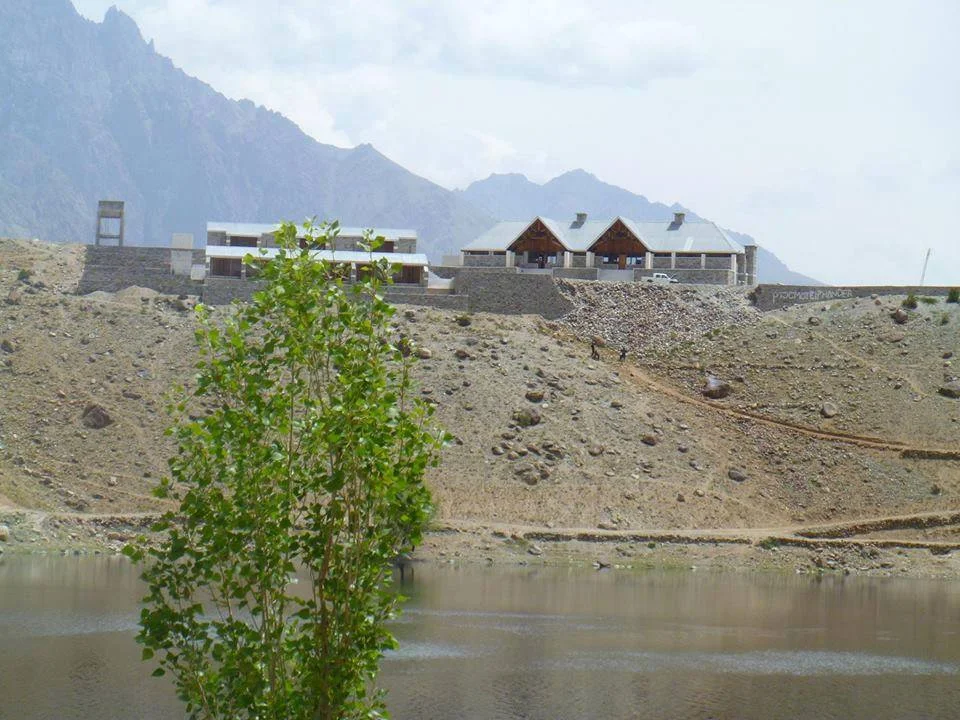
The mention of Phander Valley would be incomplete without talking about Phander Lake. The PTDC hotel, which is located on a hill, offers a beautiful view of Phander Lake, which is shaped like a bowl. People come from far and wide to see this lake. The river is connected to the lake and keeps it filled with water. However, in winter, when the river’s water level drops significantly, a small gap appears between the lake and the river, though this separation is temporary. As soon as the summer begins and the surrounding glaciers and snowbanks melt, the river and the lake reconnect.
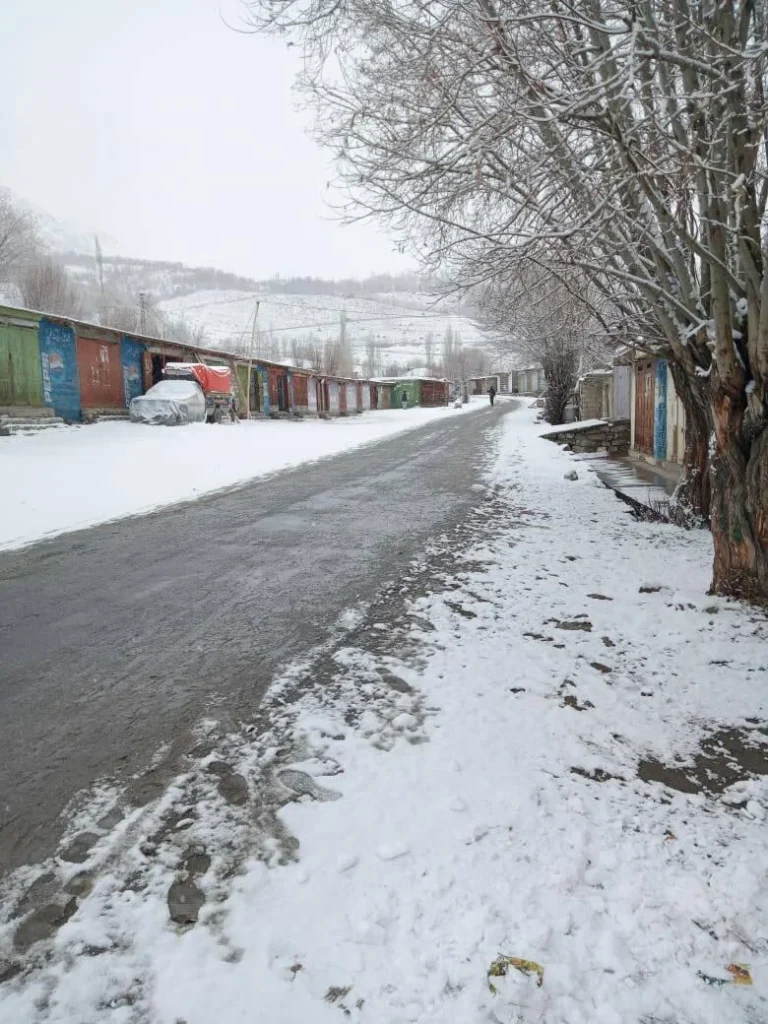
Winter in this region is harsh, with snow covering everything, and the lake’s water freezes. The ice layer on top becomes so thick that the lake turns into a vast icy field, and the local youth play cricket on it. There is an unpaved road on one side of the lake. If you leave the paved road and walk along the edge of the lake, you will find your journey even more enjoyable. Sometimes, I noticed the lake’s water appearing green or deep green.
The river’s water is also crystal clear, and at times, I noticed it as light green or deep green. Once, I saw the lake’s water appear blue. I wondered whether it was an illusion or if the river and the lake change their colors at different times of the day. When I took a photo of the lake, the water appeared a deep blue. This color change is likely due to the intensity of the sunlight, cloud cover, or the subtle sunshine, which makes the water change hues.
A tree plays a significant role in enhancing the natural beauty of the valley, known locally as “Sufida”—though it is not the same as the “Sufida” tree in Punjab. I would call it “Sepidar.” This tree grows tall and straight like a pillar, with small branches growing along its trunk. People plant these trees everywhere, and when planted in rows, they stand out and can be seen from a long distance. The Sepidar trees are found in higher altitude areas, and they are quite common and valuable in Phander. People use them for construction purposes when building houses.
In the valleys of Poniyal or near Gilgit city, you won’t see these trees. Beyond Phander, before reaching Shandur Top, there are several villages situated at a higher elevation. If you’re up for the challenge, there is a beautiful lake high in the mountains above the village of “Hindrap”. This lake is known for its abundant delicious trout fish, but to reach it, you need to walk for three hours. There’s also another lake called “Khokash Lake” above the village of “Langar,” but it too requires a two- to three-hour trek to reach.

If you have the courage, enthusiasm, and determination, you should definitely visit these lakes with their changing-colored waters. Catch some fish, but make sure to get a permit from the Fisheries Department to fish in these waters. If you plan to stay overnight at these lakes, make sure you bring a blanket, tent, and warm clothing. If not, you can visit during the day and return in the evening, but still, make sure to wear warm clothes like a jacket because the higher altitude makes it cold even during the day. The cold is much harsher at night. Keep in mind, I’m talking about summer here. In winter, going to these lakes is nearly impossible.
