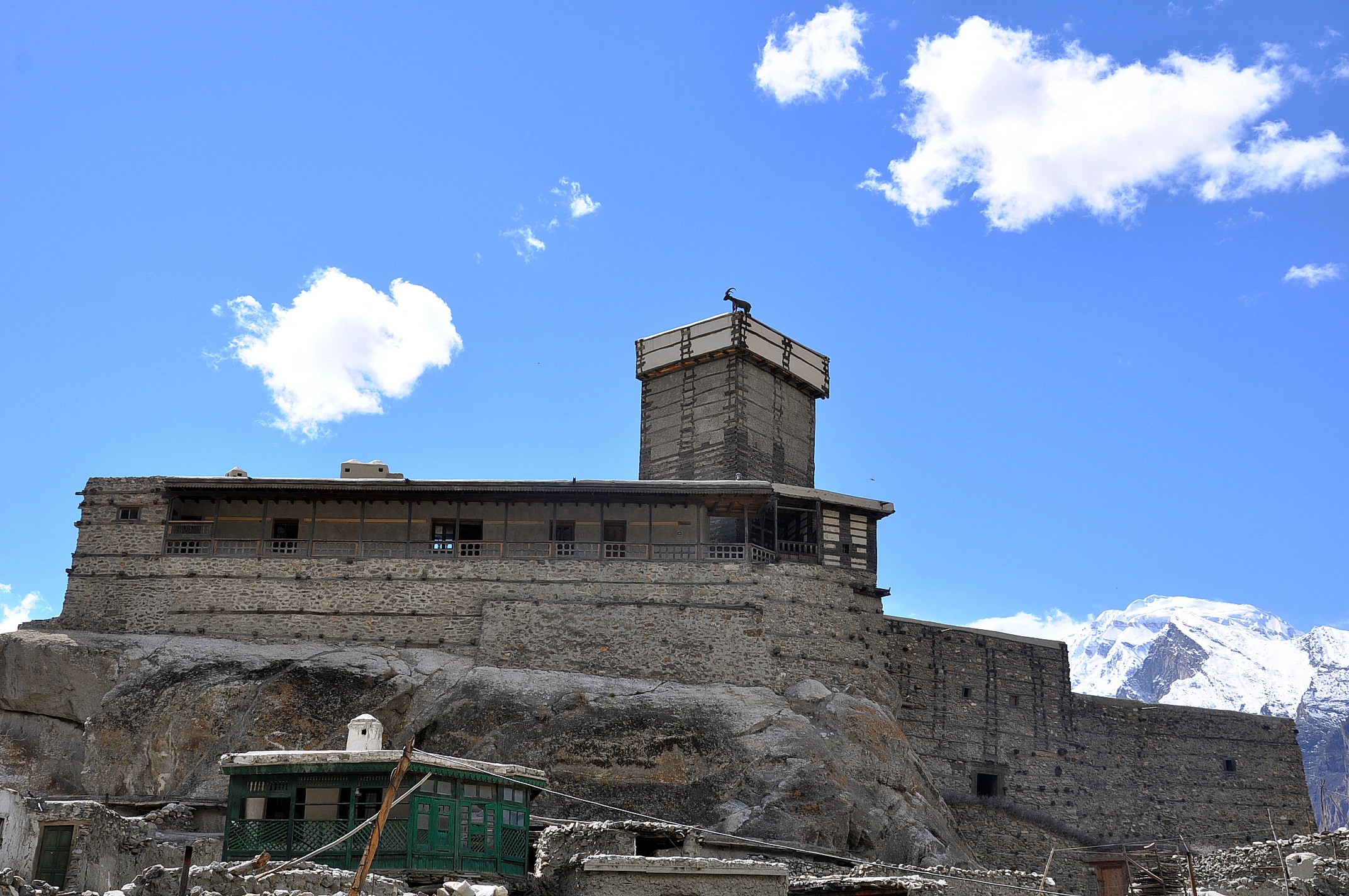
The majestic grandeur of Hunza is reflected in the Altit Fort, which is located on the banks of the Hunza River in Upper Karimabad. The fort was constructed by the Mir of Hunza to assert his power and magnificence over the neighboring state of Nagar. Since around the 11th century, it has stood proudly in the Karakoram Mountains.
An important feature of this fort is that it not only withstood several foreign invasions but also remained firmly in place during earthquakes, not shifting even an inch. The Altit Fort, especially the Hunting Tower, is nearly 900 years old, making it the oldest monument in Gilgit-Baltistan. Like many other forts in Pakistan, the Altit Fort was once in a state of decay, but it has recently been restored by the Aga Khan Trust for Culture with the help of the Norwegian government.
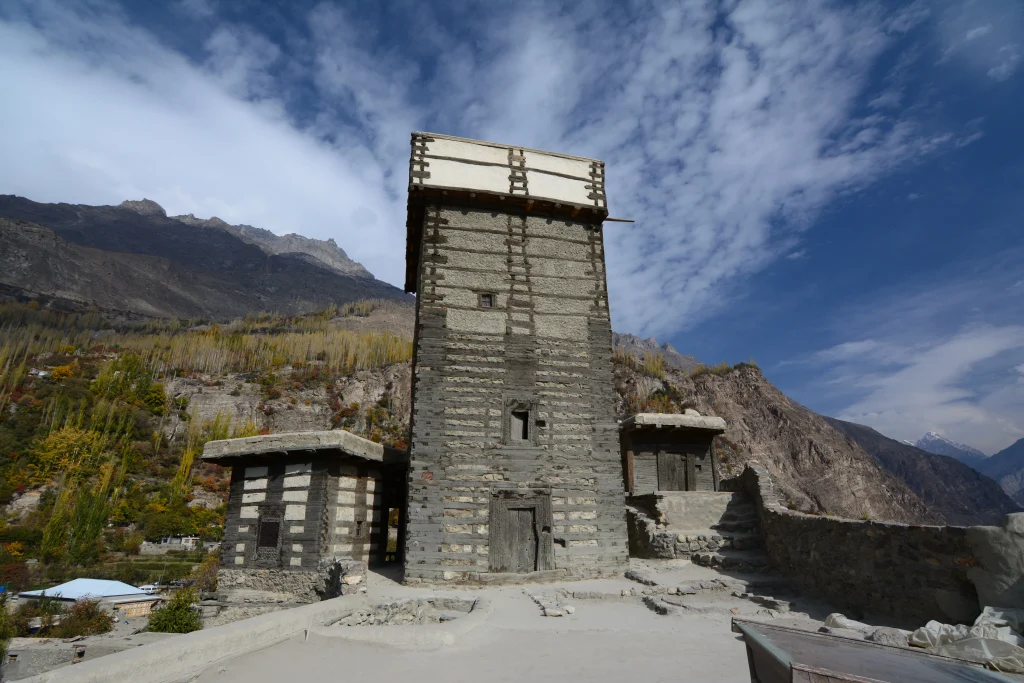
Upon entering with a 500-rupee ticket, the lush Shahi Bagh (Royal Garden) greets visitors, with trees laden with ripe apricots bending with their bounty. A beautiful trail alongside this garden leads you to the Altit Fort, with the Hunting Tower visible from a distance. The fort is perched 1,000 feet above the Hunza River, built to monitor the entire region during wartime. In the past, the Hunza Valley was often under threat from invasions by Russia and China. From a place near the fort, prisoners and rebels were thrown into the Hunza River below as punishment, where their bodies were never recovered.
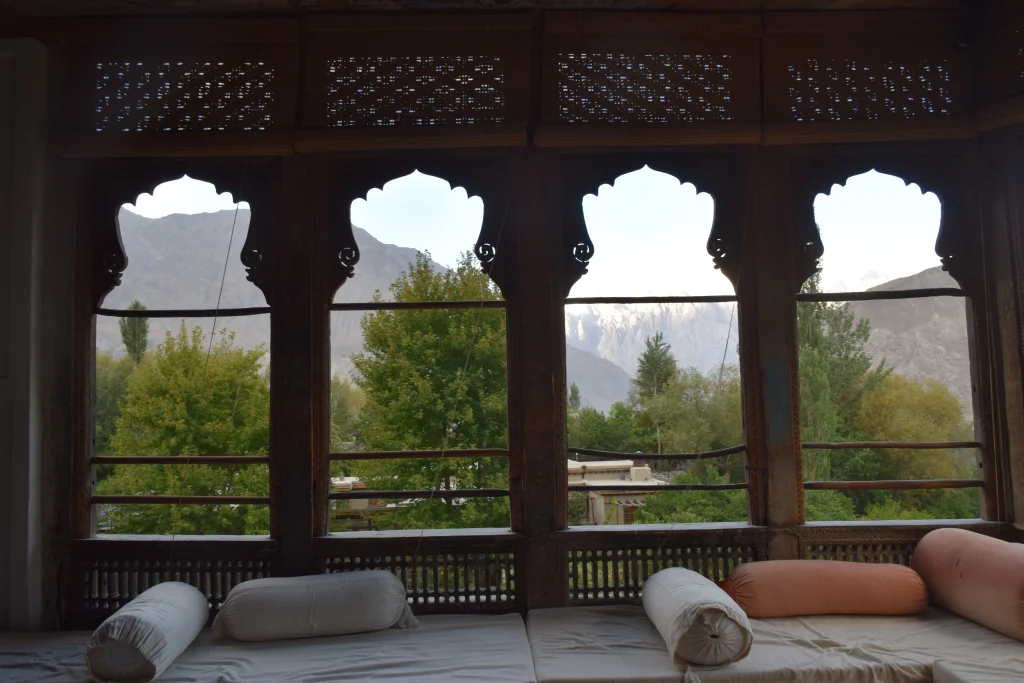
Approximately 400 years after the fort’s construction, a rift occurred in the royal family of Hunza, with Prince Shah Abbas and Prince Ali Khan attacking each other. According to our guide, Prince Abbas had Ali Khan imprisoned alive within a pillar, which is still present inside the tower. Additionally, ancient utensils and boxes of the royal family are displayed in various rooms. Beautiful embroidery decorates the small wooden doors, stairs, and windows, with designs so stunning that I was left in awe. The old patterns still outshine modern designs.
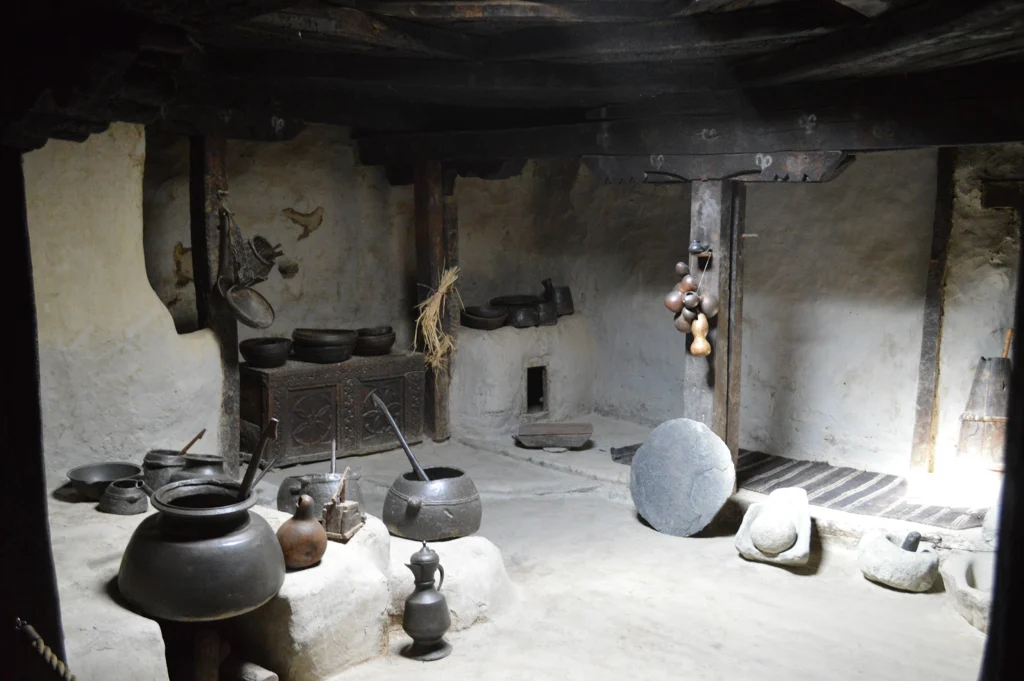
The main hall of the fort served multiple purposes, including worship, cooking, and various gatherings. Inside, there is an ancient cooking vessel and a wooden box with several swastika symbols. According to the guide, the swastika symbol was used in the Aryan era to represent the four basic elements: air, fire, water, and earth. Later, this symbol was adopted by Hitler as his emblem, and it was worn by the German army as an armband. The box was used for storing flour.
Next, we were shown the royal rooms where the princes and other royal family members once lived. From the windows of these rooms, one can admire the breathtaking view of the blue Hunza River. There is also a winding black line resembling a snake, which is the Karakoram Highway. Beyond that, a beautiful gallery overlooks the picturesque Hunza village, with small houses, smoke rising from chimneys, and snow-covered mountains in the background. This is why Altit Fort is referred to as the pride of Hunza. The royal guest rooms inside the fort have now been transformed into a small museum, showcasing rare photographs related to the royal family and Hunza.
On the upper rooftop, there is the Hunting Tower, a wooden window, and a small room with a beautifully crafted wooden door. Outside the fort, there is a lovely green pond, handicraft shops, cafes, and beautiful homes. Hunza artists, seated in front of these homes, attract tourists by playing various tunes on the rabab, a traditional musical instrument.
The history of Altit and Baltit Fort in the eyes of the people of Hunza.
The history of Baltit Fort and Altit Fort can be viewed from various angles, one of which is the perspective of the people of Hunza. According to the people, these forts represent the history of the atrocities committed by the Mir of Hunza against the local population, as the construction of these forts involved the blood, sweat, and labor of the people of Hunza. The construction of both these forts required forced labor from the people, meaning the workers were not compensated. Instead, the state’s power was used to coerce the people into grueling work. Forced labor, or begar, is considered a shameful and cruel practice in civilized human history. Specifically, during the reign of the last ruler of Hunza, Mir Muhammad Jamal Khan (1945–1974), the wood for the construction of the new fort was brought from Chuprot (Nagar). The unfortunate reality was that the people of Shinaki (from Khizrabad to Nasirabad) had to carry this wood on their shoulders from Chuprot to Murtazaabad, a distance of about 40 to 50 miles. Many people suffered severe injuries to their shoulders and backs. For this reason, in the Shina language, when heavy loads are mentioned, the saying “Rajoo Kato” (Wood of the Rajoos) is used. Furthermore, the maintenance and repair of these forts, farming, gardening, sowing and harvesting crops, and even cutting and gathering grass, were all the constant responsibility of the people of central Hunza, which was an extremely exhausting and cruel task that they were forced to perform out of necessity. In light of these difficult and deplorable circumstances, the saying “Broshoo Abshing” (The issues and struggles of the Broshoo people) became popular in the Burushaski language.
Particularly, Baltit Fort was a place, or rather a stronghold of oppression, where the poor and oppressed people (especially from Shinaki and Gojal) were subjected to crushing taxes, extracting cries of anguish from the people. The injustice was that this tax was not used for the welfare of the people but was instead spent on the luxury and indulgence of the Mir and his followers and retainers. Moreover, anyone who raised their voice for freedom (either an individual or group) was brought here and sentenced to hard labor or even executed. This fort was also a hub of palace conspiracies. Therefore, seeking the true history of the people of Hunza from these forts is a futile effort. It would be more accurate to say that these forts are tied to the history of the oppression suffered by the people of Hunza. In our view, one of the purposes of the restoration and rehabilitation of these forts could be that these restored structures continue to narrate the tale of the tyranny of Hunza’s hereditary rulers and the suffering of the people of Hunza to future generations. In this regard, the statement of the famous Iranian scholar and sociologist Dr. Ali Shariati is noteworthy, in which he says that the Great Wall of China represents a bloody line on the surface of the earth.
