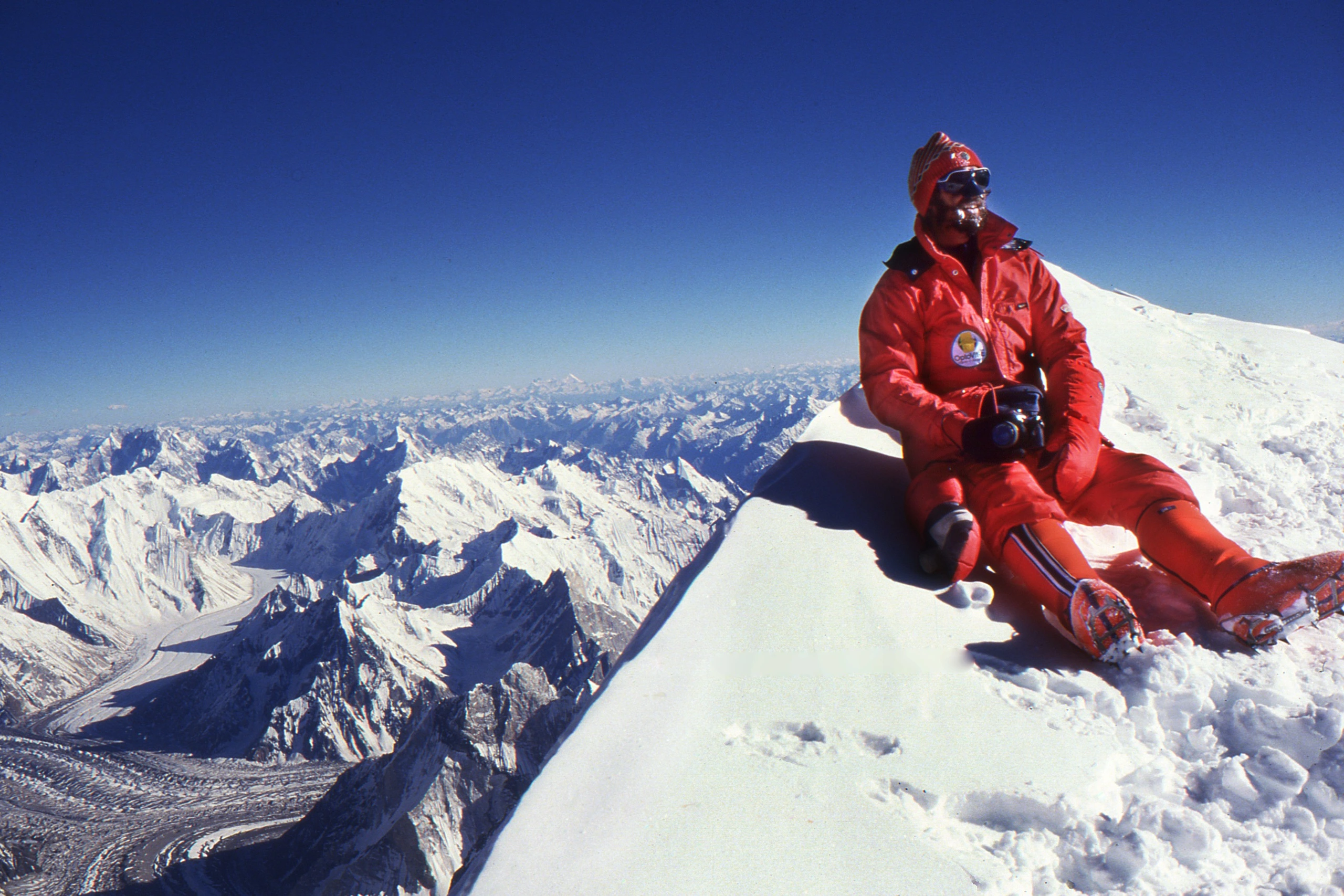
You might remember the scene from the film Everest where New Zealand guide and mountaineer Andy Harris suddenly starts experiencing delusional thoughts. He removes all his clothes and gear, embracing death.
Six years ago, I couldn’t understand why Andy would do something like that. Back then, I didn’t know that Harris was suffering from hypoxia and how a lack of oxygen at such high altitudes affects the human brain and body.
K2, while igniting a sense of adventure in the hearts of climbers aiming to conquer towering peaks, is considered even more dangerous than Mount Everest, the world’s highest peak.
One in four climbers attempting to conquer K2 loses their life. The death rate on K2 stands at 29%, compared to just 4% on Everest.
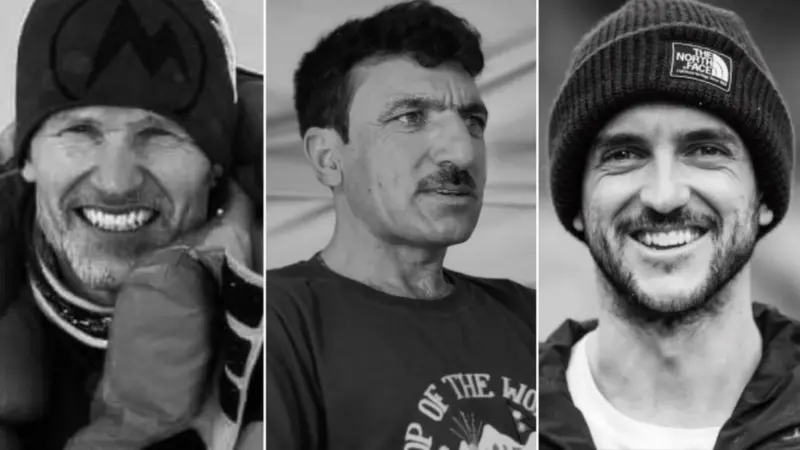
Pakistani mountaineer Muhammad Ali Sadpara, along with two other climbers, went missing on Friday during their attempt to conquer K2, the world’s second-highest peak, in winter. Since then, all contact with the base camp, team, and their families has been lost. After two days of unsuccessful search and rescue operations by Saturday night, Ali Sadpara’s son, Sajid Sadpara, stated that the mission should now transition into a recovery operation to find his father’s body.
From the start of this search and rescue mission, questions have been circulating on social media in Pakistan and among mountaineering enthusiasts and the general public: What are the chances of survival for these three climbers in such extreme cold at an altitude of 8,000 meters?
What is the Death Zone?
To understand the concept of the Death Zone, it’s essential to first define what it is, how long climbers can survive in it, and the effects of such extreme altitudes on the human brain and body.
Medical experts state that the human body is designed to function optimally at altitudes up to 2,100 meters (approximately 6,900 feet) above sea level. Beyond this altitude, the oxygen saturation in the body begins to drop rapidly, leading to adverse effects on physical and mental functioning.
According to Rick Martin, author of Action Guide to High Altitude Acclimatization and Illness, climbers undergo weeks of acclimatization before attempting such high altitudes. This process helps the body adapt gradually to the reduced oxygen supply, allowing the brain and body to function within the constraints of the environment.
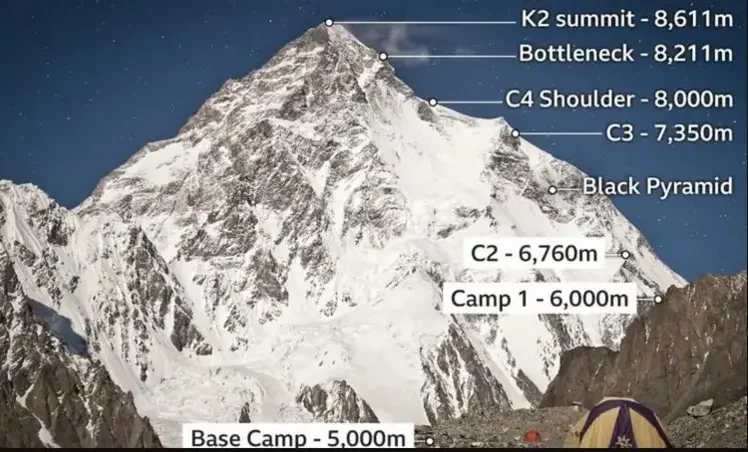
Mountaineering experts note that climbers on K2 typically enter the dangerous zone after Camp 1 (located at 6,000 meters or roughly 19,700 feet). From this point onward, the effects of oxygen deprivation—such as fatigue, confusion, and reduced physical performance—begin to manifest.
In the Death Zone, which lies above 8,000 meters (26,247 feet), these risks are greatly amplified. The human body starts deteriorating rapidly due to insufficient oxygen, making survival extremely difficult without supplementary oxygen or rapid descent.
Researcher Swapneel Paralkar, affiliated with GMERS Medical College in Gujarat, India, has conducted extensive research on this topic. In his study, he explains that many climbers fall victim to High Altitude Pulmonary Edema (HAPE) or High Altitude Cerebral Edema (HACE), which are among the leading causes of fatalities at extreme altitudes.
Effects of Hypoxia (Oxygen Deprivation):
- Increased Heart Rate:
Hypoxia causes the pulse to accelerate as the body struggles to deliver oxygen to vital organs. - Thickening of Blood:
The blood becomes more viscous, increasing the risk of clots and strokes. - Pulmonary and Cerebral Edema:
In severe cases, climbers’ lungs can fill with fluid, leading to HAPE. Additionally, the brain can swell, resulting in HACE.
Symptoms of Severe Conditions:
- Respiratory Issues:
Climbers may develop a persistent cough, with or without blood, severely impacting their breathing. - Cognitive Impairment:
In extreme conditions, climbers’ brains may cease functioning properly, impairing their judgment and cognitive abilities. - Delusional Thoughts:
As a result, climbers might experience hallucinations or delusions, often leading to irrational behavior, much like the actions of Andy Harris depicted in the movie Everest.
In such a state, a climber’s ability to make rational decisions deteriorates, making survival extremely challenging without immediate assistance or descent to lower altitudes.
At an altitude of 8,611 meters above sea level, K2’s notorious “Bottleneck” begins at around 8,000 meters. In mountaineering terms, this area is referred to as the “Death Zone,” where survival challenges significantly intensify.
Challenges in the Death Zone:
- Harsh Natural Conditions:
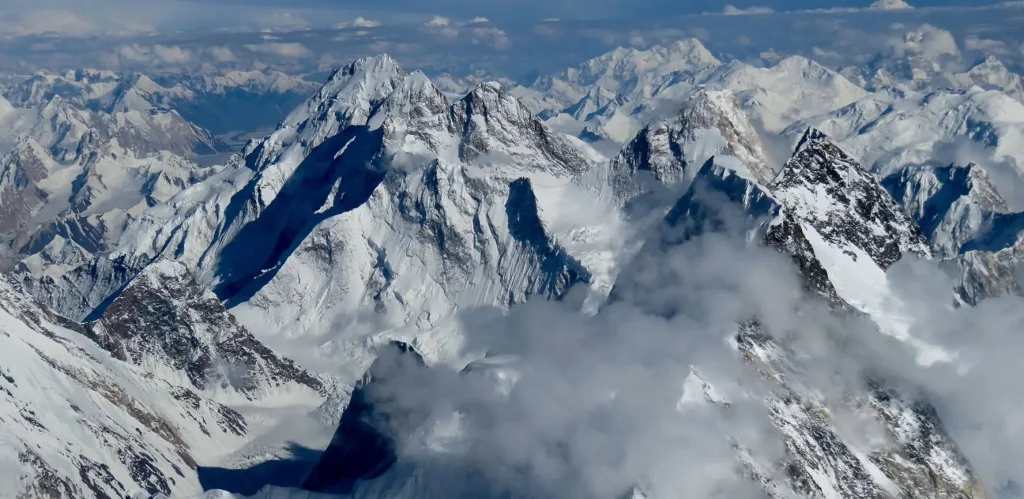
Climbers must battle extreme weather conditions, including high winds and freezing temperatures, while navigating treacherous terrain where a single misstep could result in a fatal fall into a glacier or a deep crevasse. - Oxygen Deprivation:
The severe lack of oxygen at this altitude has profound effects. The human brain starts losing control over the body, which can lead to paralysis. The deficiency also heightens the risk of Altitude Sickness, making each step increasingly perilous. - Strong Winds:
The intense winds at these heights can easily destabilize climbers, adding another layer of danger to their journey. - Freezing Temperatures:
Extremely low temperatures in the Death Zone can cause frostbite, leading to permanent damage to exposed body parts like fingers, toes, or even facial features.
At these elevations, climbers are not just fighting against the elements but also against the limitations of their own bodies, making every moment in the Death Zone a critical test of survival.
According to Professor Herbert N. Hultgren, an expert on medical issues encountered at high altitudes, climbers reaching such heights are susceptible to severe medical conditions, including cerebral edema, retinal hemorrhage, intense headaches, nausea, disorientation, and hallucinations.
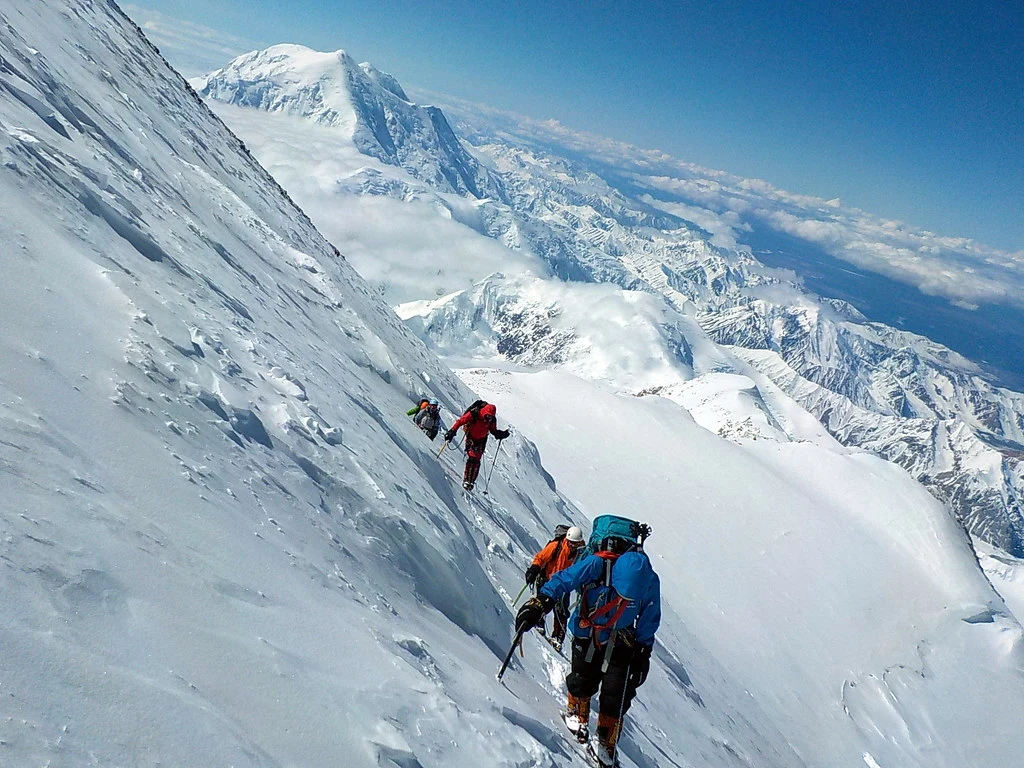
The Dangers of the Death Zone:
In the Death Zone, there is no margin for error. Spending too much time there, sleeping, or lingering excessively often results in death. Climbers are instructed to minimize their time in this zone as much as possible.
At Camp 4, located within the Death Zone, climbers typically avoid sleeping altogether. They rest briefly before attempting their summit push and strive to ascend and descend within 16 to 18 hours.
How Long Can Climbers Survive in the Death Zone?
The straightforward answer is 16 to 20 hours. Climbers are strictly advised not to exceed this time limit under any circumstances. Prolonged exposure significantly increases the risk of life-threatening conditions, making rapid movement through the Death Zone crucial for survival.
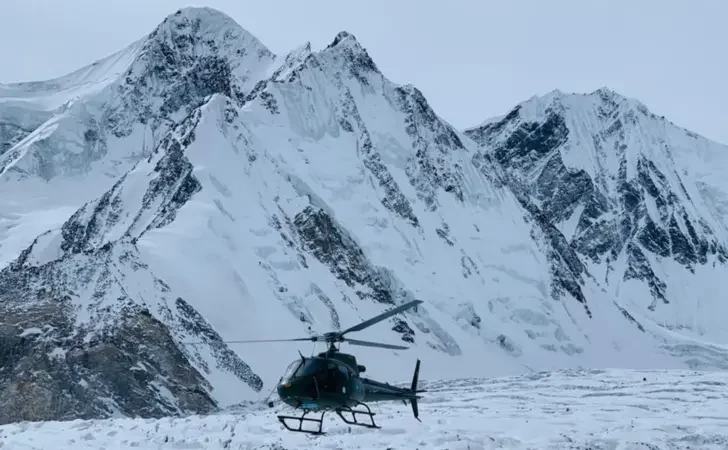
While the chances of surviving above 8,000 meters for more than 48 hours are extremely slim, the record for spending the longest time in the Death Zone belongs to Nepalese mountaineer Pemba Gyalje Sherpa. In 2008, he spent an astonishing 90 hours in K2’s Death Zone while rescuing two fellow climbers.
When asked why he returned to the Death Zone to save the two climbers and risked spending 90 hours in the perilous region above 8,000 meters, Pemba humbly responded:
“I was lucky on K2, you know. I was just lucky.”
This incredible feat highlights not only his extraordinary physical resilience but also his selflessness and bravery in one of the most dangerous environments on Earth.
