
The journey from K2 Camp 1 to Camp 2 is one of the most challenging and demanding stages in any K2 expedition. While Camp 1 marks a significant accomplishment, climbers must continue their ascent through increasingly perilous conditions to reach Camp 2, situated at an altitude of approximately 6,500 meters (21,325 feet). As climbers depart from the relative safety of Camp 1, they are met with a harsh and unforgiving environment, where the thin air, steep ascents, and technical obstacles put every climber’s physical and mental endurance to the test. This phase of the journey is not only about ascending to a higher altitude but also about confronting the extreme elements of the Karakoram range.
1. The Initial Descent from Camp 1
While Camp 1 provides a well-earned rest, climbers know that reaching Camp 2 requires even more discipline, perseverance, and mental toughness. The first part of the journey involves descending slightly from Camp 1 to cross a series of rocky sections. It may seem counterintuitive to descend before climbing higher, but the route to Camp 2 involves navigating a series of steep ridges, icefalls, and narrow ledges that require careful planning and execution.
This section of the climb is crucial for acclimatization. Climbers will likely take their time here, using the descent and ascent back up to allow their bodies to adapt to the altitude, which continues to rob them of energy and breath. While technically not a major climb in itself, this descent allows climbers to test their stamina and preparation, as the high-altitude conditions can cause dizziness, nausea, and shortness of breath.

2. Navigating the Rock and Ice Wall
Once climbers descend and are ready to ascend towards Camp 2, the route begins to involve some of the most difficult climbing sections on the mountain. The climbers have to scale a steep, rock-and-ice wall that is prone to rockfalls and avalanches, which increases the danger factor significantly.
In this section, climbers must rely heavily on their technical skills, utilizing fixed ropes that have been installed by the Sherpas or other experienced climbers. These ropes help them ascend the steep rock faces, but the sheer weight of their gear, the thin air, and the physical strain make every movement a struggle.
The wall is often icy, and climbers must carefully place their crampons and ice axes to maintain their grip. The path is narrow, and the climb can often feel like a battle against gravity itself. At times, climbers will need to employ techniques such as ice climbing or even aid climbing, using additional equipment like carabiners, ascenders, and jumars to help them ascend more efficiently. This section demands not only strength but also mental focus and the ability to stay calm under pressure.
3. The Steep Traverse to the “Yellow Band”
After overcoming the rock-and-ice wall, climbers reach a prominent feature known as the “Yellow Band.” This is a steep section of yellowish, sedimentary rock that forms part of the route to higher camps. The Yellow Band is one of the most challenging sections of the climb because it is steep, unstable, and prone to rockfalls, especially as climbers ascend higher and the snow conditions change.
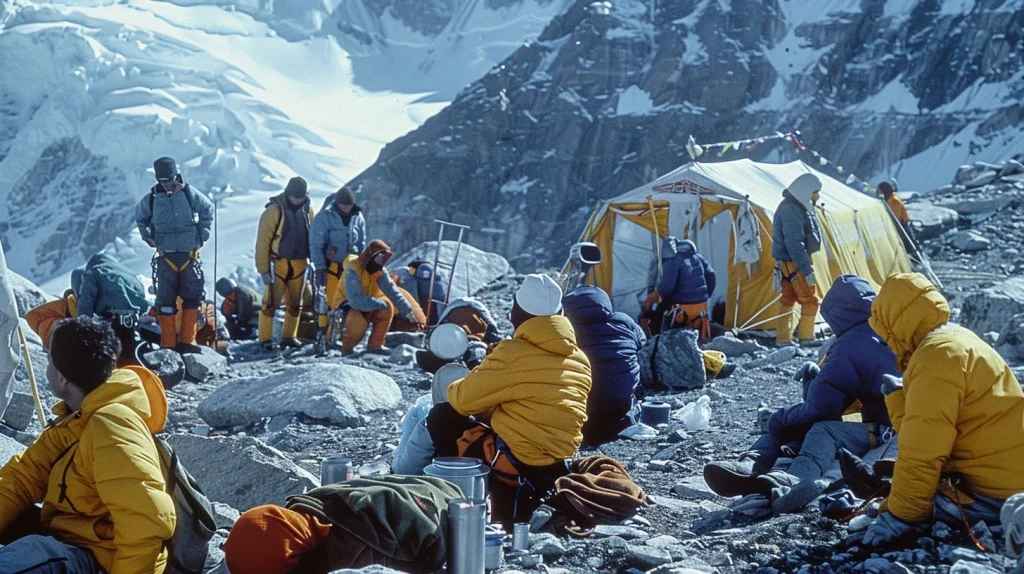
At this point, the climbers are dealing with significant fatigue, and the altitude is taking its toll on their physical condition. Every step becomes more laborious, and climbers have to fight against the intense winds and the biting cold that characterizes the Karakoram mountain range. The air becomes thinner as they ascend, and each breath feels like a victory. In these conditions, mental toughness is just as important as physical strength. The climbers need to maintain a steady pace and avoid rushing, as any misstep could prove disastrous in such an exposed location.
As they make their way through the Yellow Band, climbers must remain cautious of the shifting rocks and unpredictable snow conditions. The descent and ascent in this section often require great patience, as climbers move cautiously from one foothold to the next, relying on the fixed ropes for stability and safety.
4. The Traversing of the “Abruzzi Ridge”
Once past the Yellow Band, climbers reach the “Abruzzi Ridge,” a famous section of the K2 climb that takes climbers across a narrow ridge to reach Camp 2. This section involves traversing over rocky outcrops and snow-covered ridges, where the path becomes less clearly defined. The exposure is immense, with steep drops on either side of the ridge. The constant shifting of ice and rock increases the risk of avalanches and rockfalls, making it an extremely dangerous part of the climb.
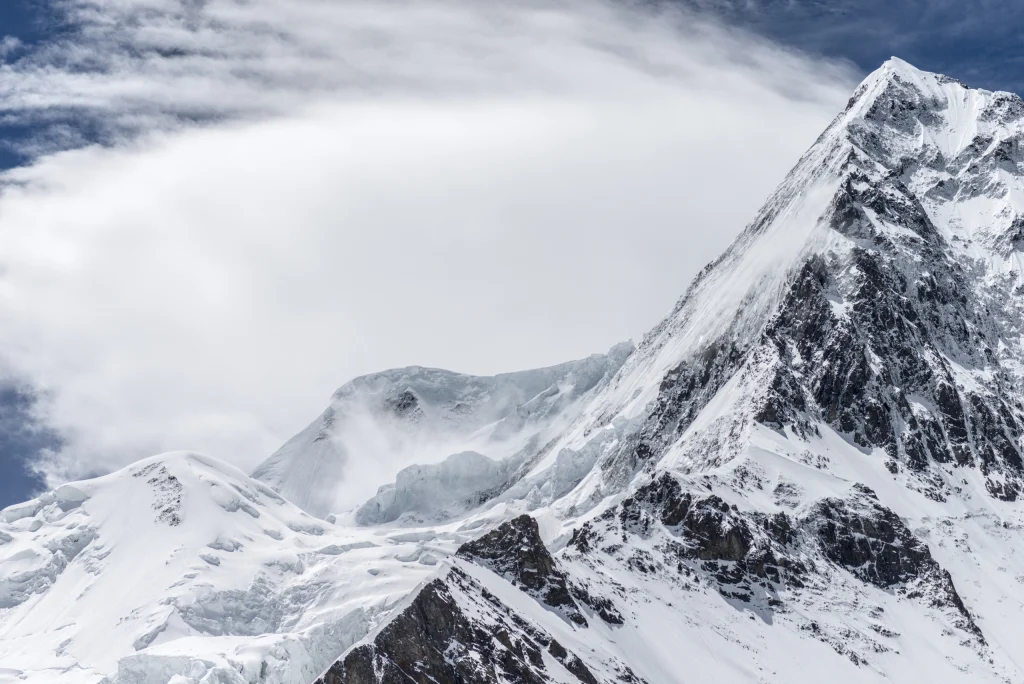
The Abruzzi Ridge is a narrow, exposed section that requires climbers to carefully move along the ridge with limited space to maneuver. At times, they will find themselves inching across snow and ice ledges, using their ice axes to secure their footing. The climbers will also need to be very cautious of loose rocks, which can easily be dislodged by their movements or by external factors like wind or the movements of other climbers.
While the views from the Abruzzi Ridge are stunning, with sweeping panoramas of K2’s slopes and the surrounding mountain peaks, the extreme environment demands all of the climbers’ attention. They need to remain focused and take each step deliberately. Fatigue, altitude, and the constant exposure to cold can start to affect climbers mentally and physically, but the goal of reaching Camp 2 keeps them moving forward.
5. The Final Push to Camp 2
The final push to Camp 2 is perhaps the most physically demanding segment of the entire journey from Camp 1 to Camp 2. This section requires endurance, as the steep inclines and difficult terrain continue to challenge even the most experienced mountaineers. The last few hundred meters of the climb are often a test of willpower. The climbers have to navigate through difficult snow and ice conditions, using every last ounce of strength to haul themselves upward.
As climbers near Camp 2, the air becomes even thinner, and the body’s exhaustion begins to compound with the altitude’s effects. Climbers often experience shortness of breath, dizziness, and fatigue, making each step feel like a monumental effort. The fixed ropes here are crucial, as they help provide support on the steep and icy slopes.
The final stretch to Camp 2 involves negotiating a series of difficult ice walls, with climbers using their ice axes to pull themselves up the steep faces. At times, they will have to rest in between ascents to catch their breath and rehydrate. But the sight of Camp 2 ahead, perched high on the mountain, offers a beacon of hope and motivation to continue onward.
6. Arriving at Camp 2
Finally, after what feels like an eternity of struggle, climbers arrive at Camp 2, a temporary haven in the midst of the vast Karakoram range. Camp 2 is an essential rest point, situated just below the upper reaches of K2. It serves as a staging ground for further acclimatization and for summiting the mountain.

Upon arrival at Camp 2, climbers are greeted with a sense of triumph, but there is little time to relax. The thin air, low temperatures, and dangerous surroundings mean that climbers must stay vigilant even while they rest. However, reaching Camp 2 is a significant achievement, and climbers often take a moment to reflect on their journey. They have overcome numerous challenges, including the treacherous rock-and-ice walls, the Yellow Band, and the exposed Abruzzi Ridge, all while battling the high-altitude conditions.
The journey from Camp 1 to Camp 2 is a critical phase of any K2 expedition. It involves technical climbing, endurance, and a constant battle against the harsh elements of the mountain. Each section of the route—whether it’s the treacherous rock-and-ice walls, the exposed Yellow Band, or the narrow Abruzzi Ridge—poses its own unique set of challenges, demanding that climbers push their physical and mental limits.
For many climbers, reaching Camp 2 represents a significant milestone in their journey to summit K2. It is a point where they can rest, recuperate, and prepare for the next, even more difficult stages of the climb. The route is exhausting, but it is also a testament to the strength and resilience of those who dare to take on the challenge of one of the world’s most dangerous mountains.
READ MORE RELATED K2
The Journey from K2 Camp 1 to Camp 2
