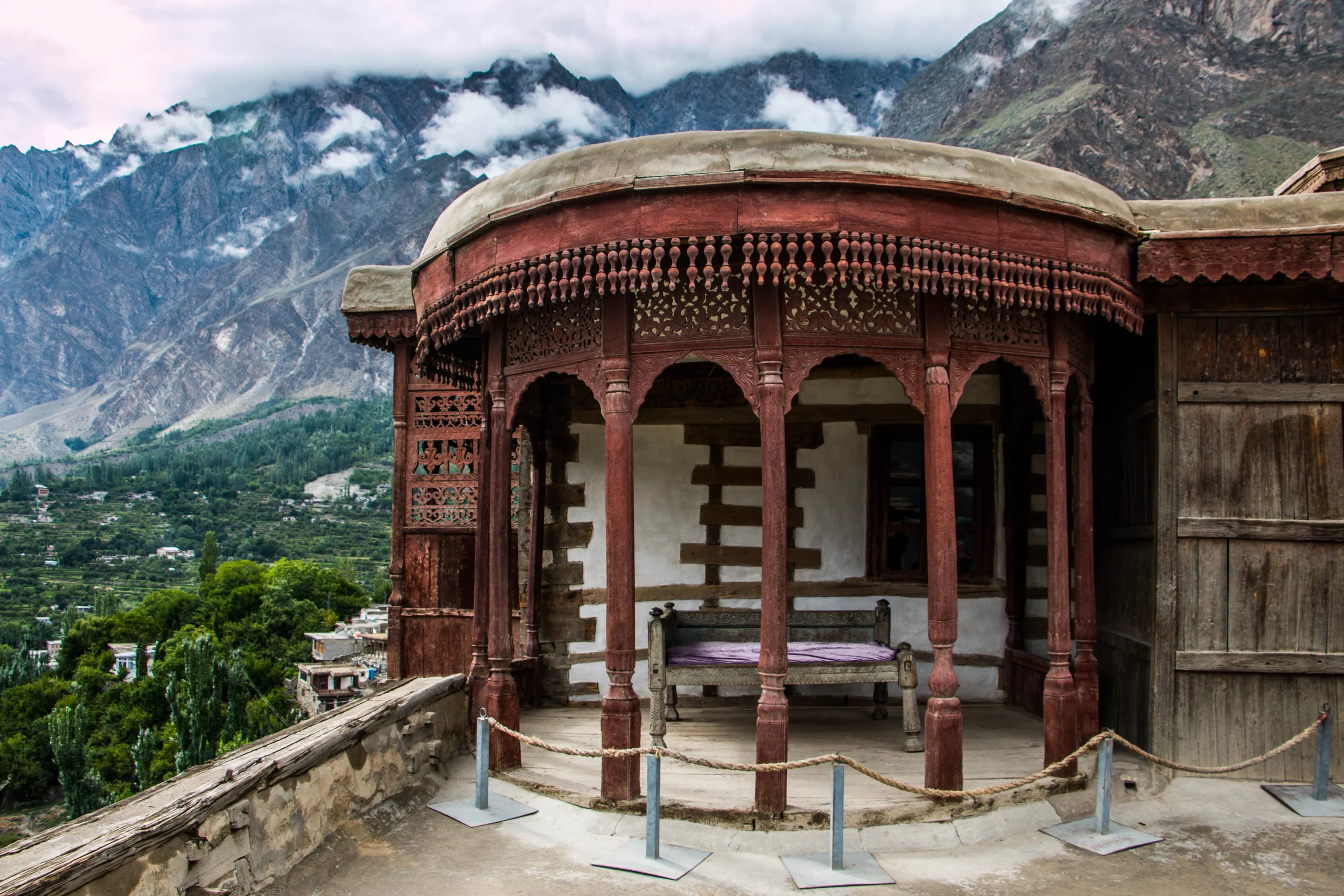
In the history of the subcontinent, it has often been the case that kings and princes built magnificent forts and palaces for their beloveds. From the Taj Mahal to Noor Mahal, it seems every ruler was willing to go to any lengths to prove their love.
However, nestled in the Karakoram mountain range in northern Pakistan is an ancient fort that a ruler chose for his daughter and built as part of her dowry in her new home.baltit fort of Hunza
Although historians remain divided about the construction of this fort, one fact is certain: when Prince Ayasho II, the fourth heir of the Ayasho dynasty, married Shah Khatoon, the daughter of Baltistan’s ruler Raja Abdal, this fort was selected as the princess’s residence.
After his daughter’s marriage, Raja Abdal sent a team of skilled craftsmen from his kingdom to the Hunza Valley along with her dowry, who contributed to either the construction or expansion of Baltit Fort.
Stories about the construction of Baltit Fort have been passed down orally for centuries, and even today, local residents narrate these tales to tourists visiting the fort.
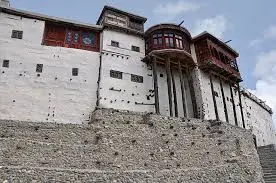
It is generally believed that the fort is around 700 years old, with its construction beginning in the 14th century. However, recent carbon dating research has revealed evidence of an earlier fort existing at the same site.
Tibetan Architecture
Baltit Fort Hunza prominently reflects elements of Tibetan architecture. In the 1990s, the Mir family of Hunza entrusted the fort to the Aga Khan Trust, which undertook its restoration and transformed it into a museum. It is now managed by the Baltit Heritage Trust. In 2004, the fort was included on UNESCO’s Tentative List of World Heritage Sites.
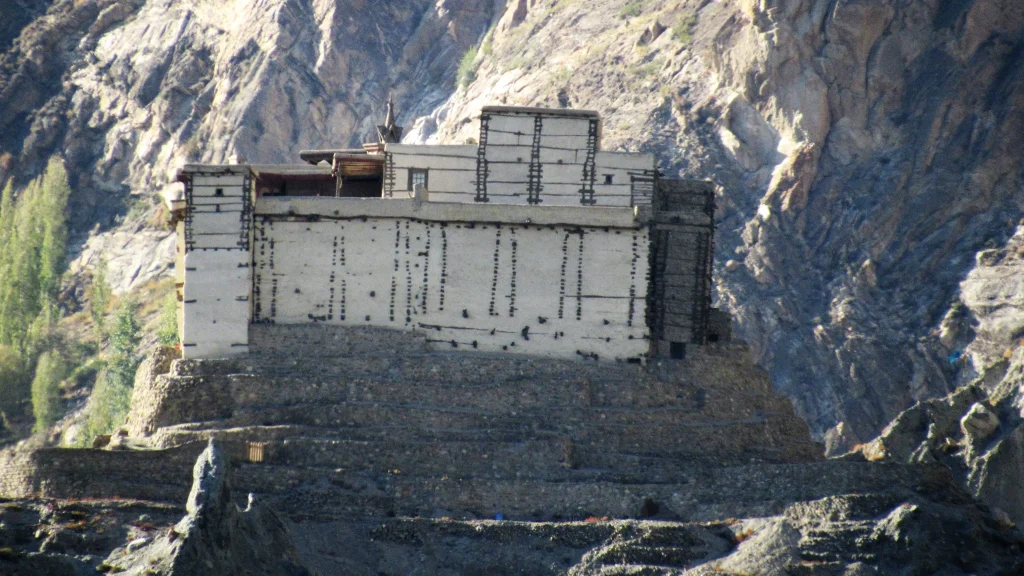
The region of Baltistan lies across the Indus River from Hunza. While this entire area is now collectively known as Gilgit-Baltistan in modern-day Pakistan, historically, its different parts are linked to distinct cultures.
Baltistan, in particular, has had a close historical connection with Tibet. Several centuries ago, it was considered part of Tibet, along with Ladakh. Even today, the region is locally referred to as “Little Tibet.”
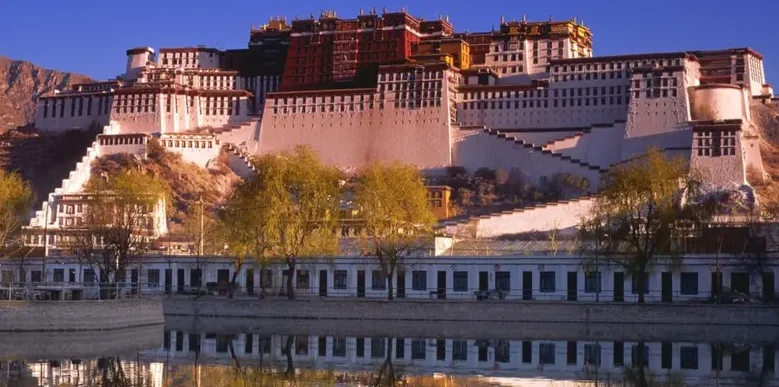
Experts note similarities between Baltit Fort and the Potala Palace in Lhasa, Tibet, which was once the residence of the Dalai Lama. Although the Potala Palace was built in the 16th century, both royal residences share similar architectural styles. Additionally, both are constructed on high peaks at the foot of tall mountains, making them difficult for enemies to access.
The Modern History of the Hunza Altit Fort
Karimabad was once the capital of the Hunza State.
Atiqa Ghazanfar, the wife of Mir Ghazanfar Ali Khan of Hunza and the Queen of Hunza, explains that this fort served as the residence of the ruling family of Hunza for several centuries. She mentioned that even the last ruler of Hunza, Mir Jamal Khan, was born in this very fort.
In 1945, she had a separate residence constructed for herself in the Hunza Valley, where she moved, but the fort is still used for special ceremonies.
According to Queen Atiqa Ghazanfar, after the state of Hunza merged with Pakistan, the preservation and restoration of the fort became beyond their or the Pakistani government’s capacity. As a result, the fort was handed over to the Aga Khan Trust, free of charge, for its restoration and maintenance.
Visit to the Fort
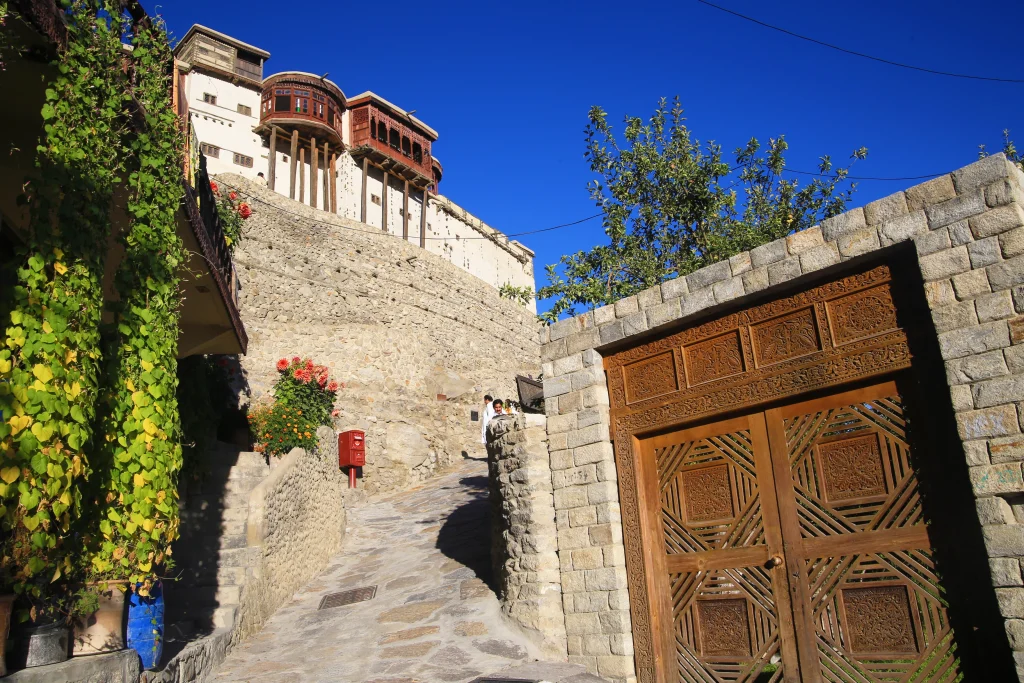
Baltis Fort Hunza ,It is clear that this three-story fort was not constructed all at once but rather expanded over time. It is believed that it originally had only one floor when it was first built. Queen Atiqa Ghazanfar agrees with this view.
The fort has a total of 62 doors and 53 rooms. In addition to stone, precious wood was traditionally used to strengthen the walls. The large windows, niches, columns of verandas, and galleries, adorned with intricate wooden carvings, showcase the remarkable craftsmanship of the builders.
The first floor is open on all four sides, while the second floor contains a guest house and royal court, where the rulers of Hunza conducted state affairs for many years. The exact spot where the ruler used to hold court is still preserved, and visitors are not allowed to sit in that area.
It is said that the third floor of the fort housed the residences of the rulers of Hunza. In the room of the Mir of Hunza, there is a furnace-like pit where the king’s wine was stored.
There is still a hole below the place where common petitioners would meet the ruler. It is believed that when a citizen would approach the king with a plea, they first presented a gift, which was placed in this hole. These offerings were usually in the form of wheat, barley, apricots, or other grains.
The lower floors mainly consist of storage rooms and chambers where food and supplies were kept.
The Altit Fort’s Museum
Today, the baltit fort of hunzas houses a museum displaying artifacts and objects that reflect the history of the fort and the way of life in the region. It is said that in the 18th century, when the British army attempted to capture the Hunza Valley, the local rulers encountered a Russian spy who had gifted them a modern rifle and a bullet.
However, when the British soldiers arrived to seize the fort with their own rifles, the Hunza defenders, equipped with old and traditional weapons, were unable to use the modern rifle, and they could not withstand the British forces.
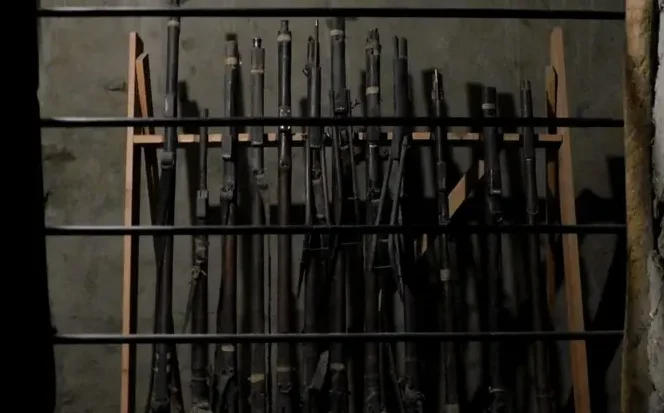
As a result, the rifle remains preserved in its original condition within the fort’s three-story structure.
The royal attire of the rulers of Hunza and the queen is also on display, though it is not specified from which era they were used. Locally crafted rugs are displayed on the walls. According to tradition, the basement was used as a prison where criminals were also punished.
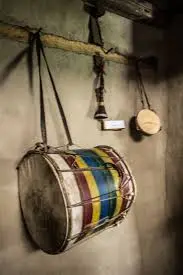
In addition to the local and traditional music of Hunza, the region’s local cuisine continues to attract tourists. The fort also houses old musical instruments from past times. In Hunza, similar musical instruments are still used during weddings or celebrations, just as those displayed in the fort.
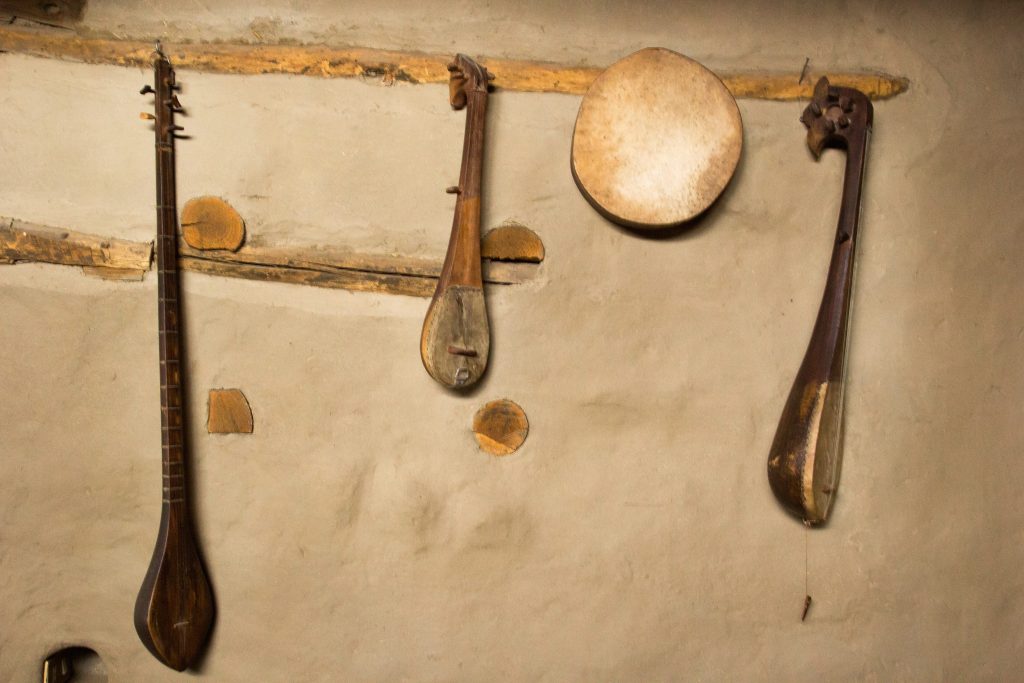
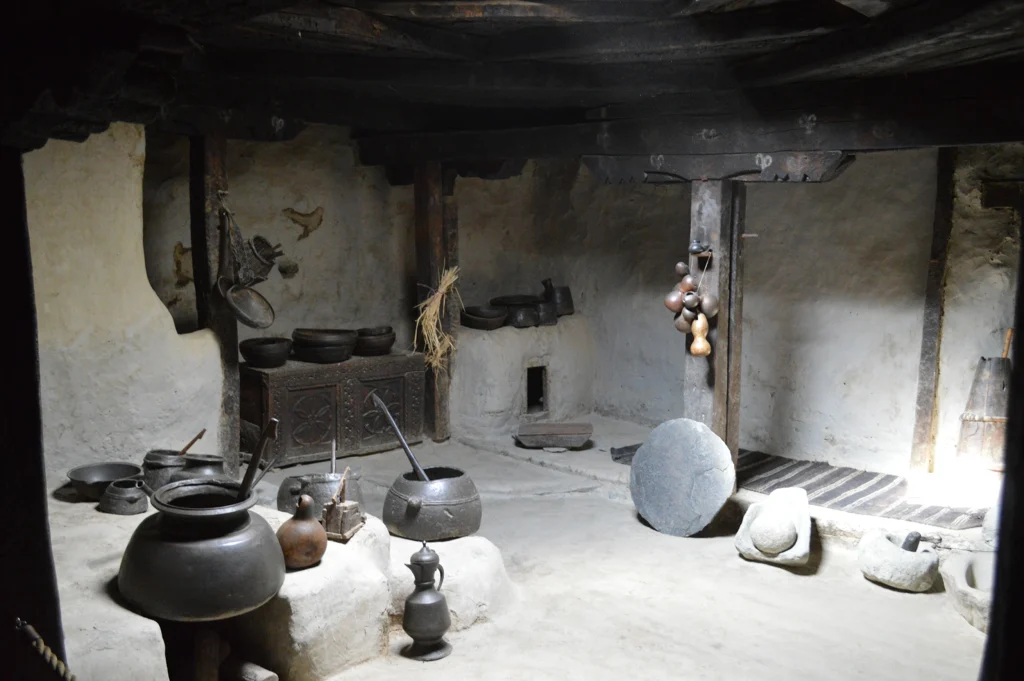
The baltit fort’s Hunza kitchen also houses iron cooking utensils that were used in the past. Even today, on the 14th day of each lunar month, visitors can enjoy traditional dishes on the royal dining table for a fee.
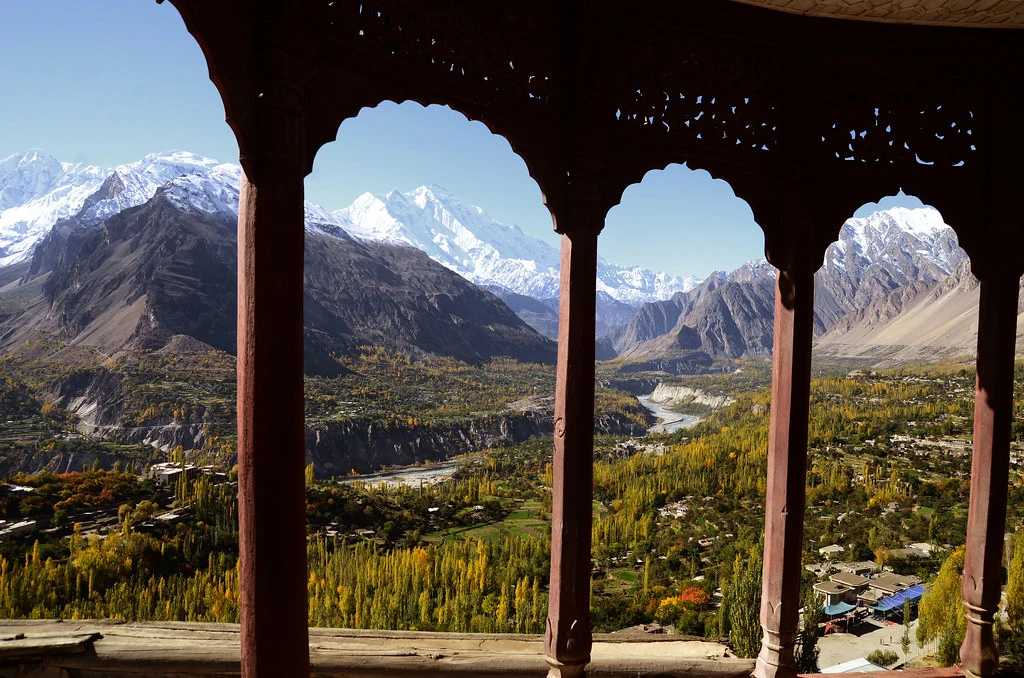
According to tourists visiting the fort, if the fort is visited during a moonlit night, not only does one get to experience the stunning views of the Hunza Valley, but the towering Rakaposhi mountain can also be seen in the distance, captivating everyone with its majestic presence.
Read More About K2 Mountain: The World’s Second-Highest Peak
Read More About Fairy Meadows Best Place For visiting In Gilgit Balitistan
