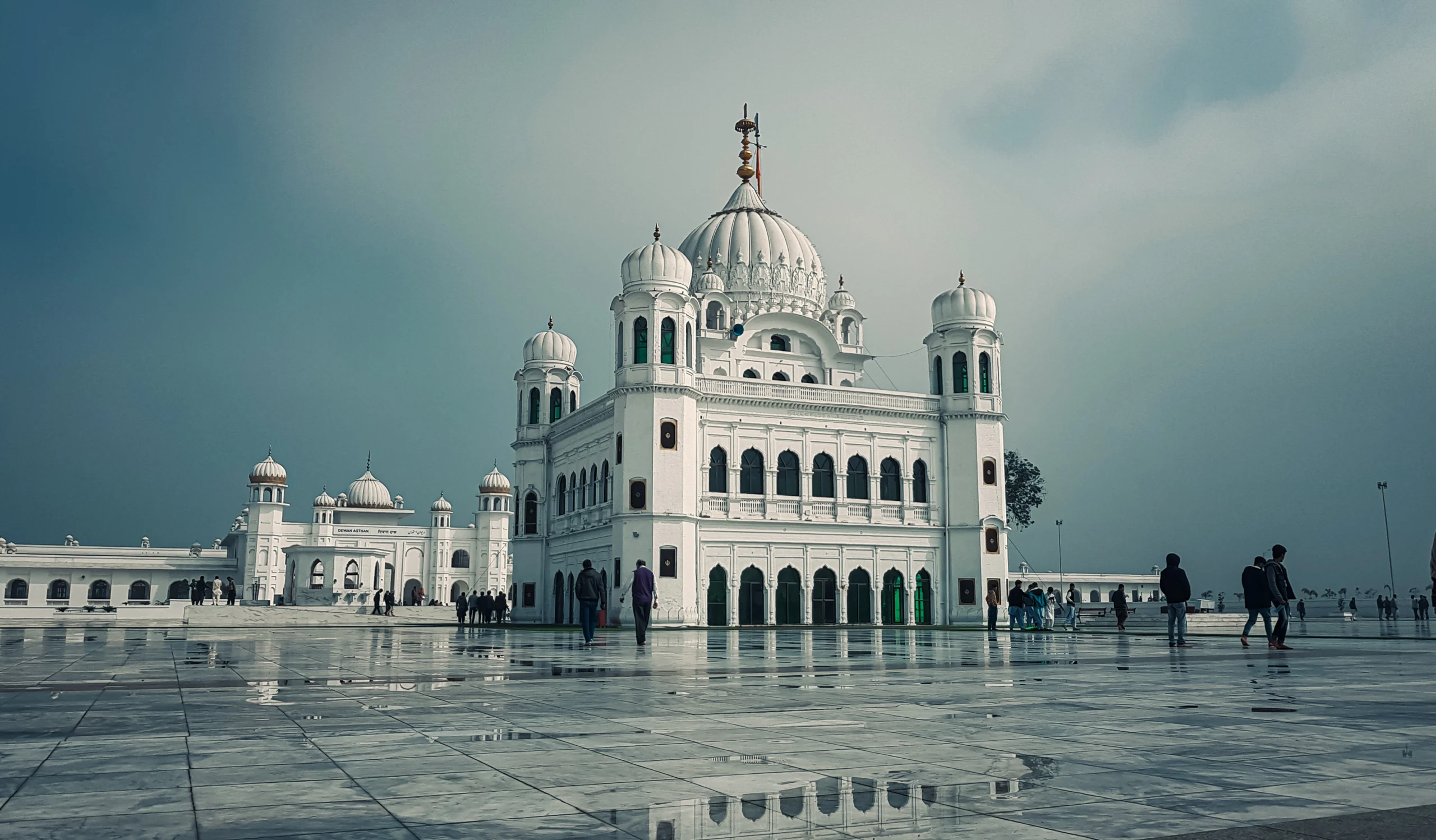
Kartarpur Gurdwara is a sacred place for followers of the Sikh religion, located on the banks of the Ravi River in the Narowal district of Punjab, Pakistan. This gurdwara is one of the largest in the world and is considered a symbol of religious harmony, love, and brotherhood.
Historical Background
Kartarpur was established in 1504 by Baba Guru Nanak, the founder of the Sikh religion. It is the place where Baba Guru Nanak spent the last 18 years of his life and where he passed away. After his demise, this site was transformed into a gurdwara to preserve his teachings and legacy.
Construction and Expansion
The current structure of Kartarpur Gurdwara was built in the early 20th century. Over time, it was further developed and expanded. In 2019, the Kartarpur Corridor was inaugurated between Pakistan and India, providing Sikh pilgrims a visa-free route to this sacred site.

Kartarpur Corridor
The Kartarpur Corridor is a historic initiative promoting religious tourism and interfaith harmony. The corridor spans approximately 4 kilometers from Dera Baba Nanak in Gurdaspur, India, to Kartarpur Gurdwara in Pakistan. It allows Indian pilgrims to perform their religious rituals without requiring a visa.
Religious Significance
Kartarpur Gurdwara holds immense spiritual significance for the Sikh community. It embodies the fundamental principles of Sikhism, such as service, love, and brotherhood. The teachings and sayings of Baba Guru Nanak continue to serve as a beacon of guidance for all who visit.
Pakistan’s Efforts
Pakistan has developed Kartarpur Gurdwara to international standards and provided modern facilities for pilgrims. This effort has been widely appreciated globally and is seen as a positive step toward improving relations between the two countries.
Kartarpur Gurdwara is not only a sacred religious site but also a living example of peace, love, and interfaith harmony. It sends a powerful message to the world that humanity is interconnected and that religion teaches us the values of love and unity.
